
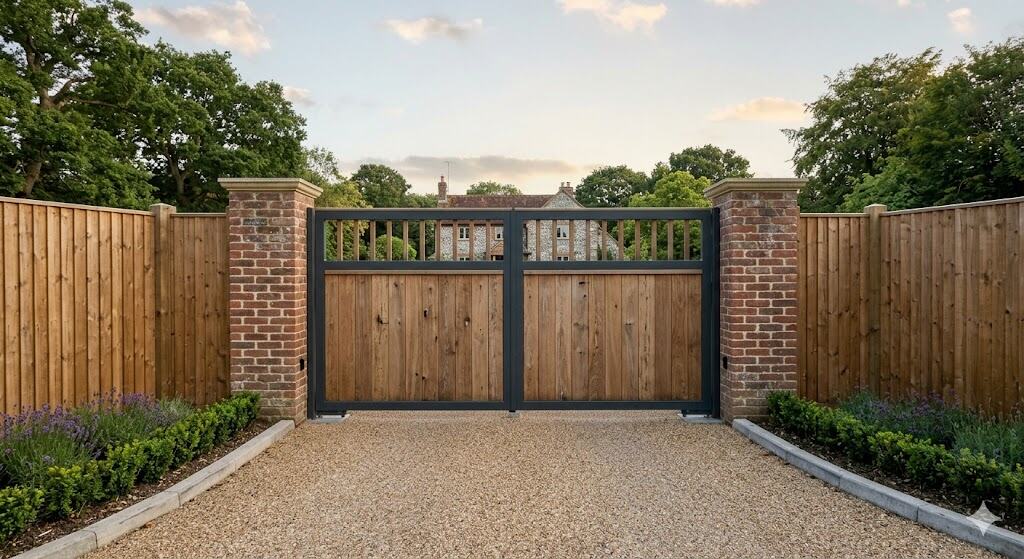
Swing vs Sliding
Electric Gates.
Choosing between swing and sliding electric gates depends on space, gradient, gate size, safety requirements and how the entrance is used. This guide explains the practical differences so you can understand which system is likely to suit your driveway or site.
Which Is Better: Swing or Sliding Electric Gates?
Neither option is automatically better. Swing electric gates are often suitable where the driveway is level and has enough clear space for the gates to open. Sliding electric gates are often better where the entrance is wide, the driveway slopes, the parking area is tight, or the opening needs to remain clear.
The right choice depends on the entrance layout, available run-back space, ground levels, gate weight, wind exposure, vehicle movement and safety risk points. A proper site survey is the only reliable way to choose the correct system.
Perimeter Fencing and Gates designs and installs both swing and sliding electric gates across Hampshire, including bespoke timber gates, steel-framed gates, cantilever systems and automation packages.
Sliding Gates vs Swing Gates
The biggest difference is movement. Swing gates open in an arc, while sliding gates move sideways along the boundary line.
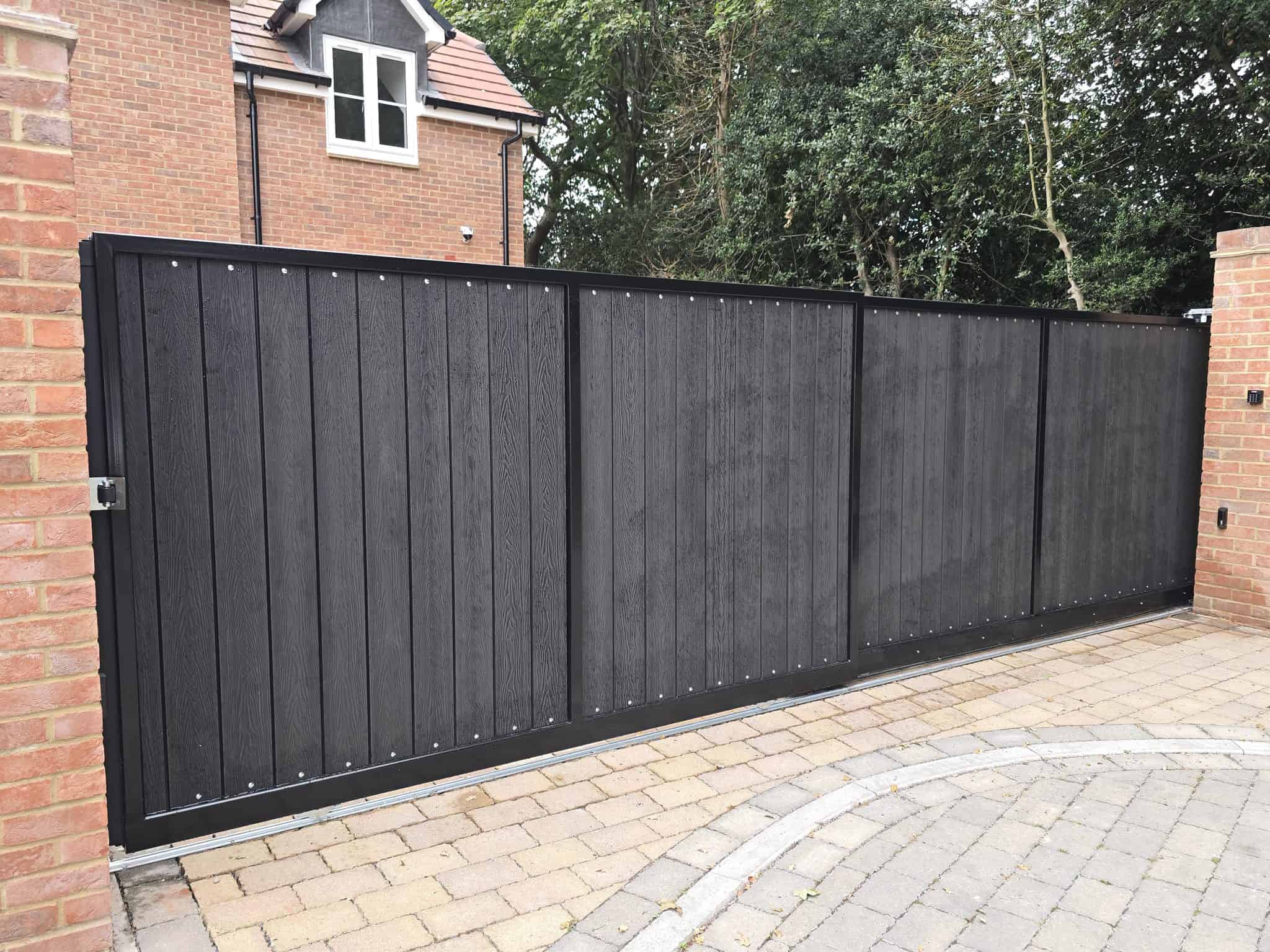 Sliding Electric Gates
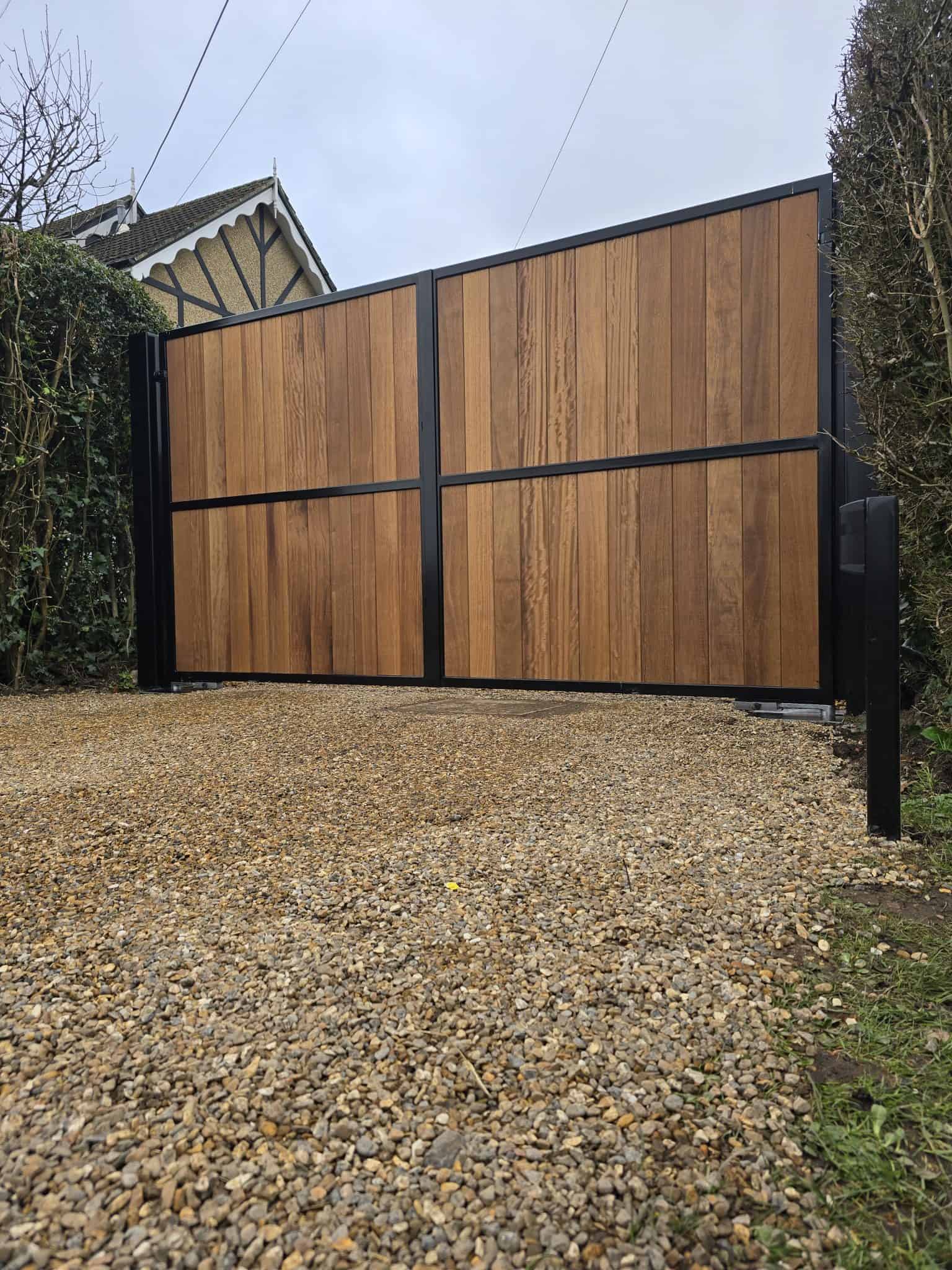 Swing Electric Gates
What Affects the Choice?
Space, slope, ground conditions, gate weight, safety and long-term maintenance all affect whether a swing or sliding electric gate is the better option.
Driveway Space
Swing gates need clear space in the direction they open. If vehicles are parked close to the entrance, or the driveway is shallow, a sliding gate can keep more of the driveway usable.
Gradient and Ground Levels
Swing gates can be difficult where the driveway rises behind the gate because the leaf needs clearance to move. Sliding or cantilever systems can be more practical on certain sloped or uneven entrances.
Opening Width
Wide entrances can suit either system, but sliding gates often become attractive where large swing leaves would be heavy, exposed to wind, or awkward to control safely.
Wind Loading
Solid or close-boarded gates can act like a sail in exposed locations. This affects both swing and sliding gates, but it is especially important when specifying motors and safety settings.
Security and Control
Sliding gates can provide strong physical control because the gate is guided along a fixed path. Swing gates can also be secure when correctly built, locked and specified.
Safety Design
Swing gates and sliding gates create different risk areas. Hinges, closing edges, run-back areas, posts, guides and shear points must be assessed and protected correctly.
Swing vs Sliding Electric Gates Comparison
This table gives a practical overview. The final decision should always be based on a site survey because every entrance has different dimensions, slopes, user behaviour and safety requirements.
| Factor | Swing Electric Gates | Sliding Electric Gates |
|---|---|---|
| Opening Movement | Open inwards or outwards in an arc. | Move sideways along the boundary line. |
| Driveway Space | Need clear space for the gate leaves to swing. | Need side run-back space, but no inward opening arc. |
| Sloped Driveways | Can be difficult where the ground rises behind the gates. | Often more practical where swing clearance is restricted. |
| Ground Conditions | Need strong posts, hinges and suitable gate alignment. | Tracked sliders need suitable ground preparation; cantilever gates avoid a ground track across the entrance. |
| Maintenance | Hinges, motors, stops, safety devices and alignment need checking. | Tracks, rollers, guides, run-back areas, motor gear and safety devices need checking. |
| Best For | Level entrances with enough clear opening space and a traditional entrance style. | Wide entrances, limited driveway depth, sloped approaches or commercial-style access control. |
When Are Swing Electric Gates Best?
Swing electric gates are often the right choice for traditional driveways, rural entrances and properties where there is enough space for the gates to open cleanly. They can suit timber gates, steel-framed gates and estate-style entrances.
The key requirement is space. The driveway needs a clear opening arc, and the ground must allow the gate leaves to move without striking the surface. The posts and hinges also need to be strong enough to support the gate safely over time.
Swing gates can be automated with above-ground operators or underground motors depending on the gate design, post positions, appearance requirements and site conditions.
When Are Sliding Electric Gates Best?
Sliding electric gates are often the better choice where a swing gate would take up too much driveway space, where the entrance is wide, or where the driveway rises behind the gate line.
A sliding gate needs enough side space for the gate to run back. Tracked sliding gates need suitable ground preparation, while cantilever gates are supported from the side and do not need a track across the entrance opening.
Sliding gates can be especially useful for commercial sites, larger domestic entrances, rural properties and driveways where parking close to the gate is important.
Safety Is Different for Swing and Sliding Gates
Swing and sliding electric gates create different risk points. Swing gates need careful consideration around hinge gaps, closing edges and opening arcs. Sliding gates need careful assessment around run-back areas, guides, posts, drive gear and shear points.
HSE guidance explains that powered gate safety depends on the complete system, including design, construction, controls, safety devices, wiring, maintenance and the site-specific risk assessment. A standard photocell setup is not automatically enough to make every gate safe.
We follow HSE powered gate safety guidance when specifying and installing automated gate systems. We also recommend using trained gate automation specialists rather than treating automation as a simple kit fitted to any existing gate.
Swing vs Sliding Electric Gates FAQs
Common questions about swing gates, sliding gates, cantilever systems, automation, safety and choosing the right entrance design.
Are sliding gates better than swing gates?
Sliding gates are not automatically better, but they are often more practical where the driveway is short, the entrance is wide, the ground slopes, or there is limited space for swing gates to open.
Are swing gates cheaper than sliding gates?
Sometimes, but not always. Cost depends on the gate size, materials, automation type, groundwork, access control and safety equipment. Sliding gates may need more groundwork or run-back space, while swing gates may need stronger posts, hinges or underground motor preparation.
Do sliding gates need a track?
Some sliding gates run on a ground track, but cantilever gates do not need a track across the entrance opening. Cantilever gates can be useful where debris, uneven ground, heavy vehicle use or drainage makes a ground track less practical.
Can swing gates work on a sloped driveway?
It depends on the slope and the direction of opening. Rising ground can restrict the gate arc and make automation more difficult. In some cases a sliding gate is a better option.
Which is safer: swing gates or sliding gates?
Both can be safe when designed, installed and maintained properly. The safety risks are different. Swing gates have hinge and closing-edge risks, while sliding gates have run-back, guide and shear-point risks.
Can existing gates be automated?
Existing gates can sometimes be automated, but only if they are structurally sound, correctly hung, stable and suitable for safe movement. Weak, misaligned, rotten or poorly supported gates may need replacement before automation is considered.
Book a Swing or Sliding Gate Survey
We can assess your entrance, explain whether swing or sliding electric gates are more suitable, and specify the gate, automation, access control and safety equipment properly.