
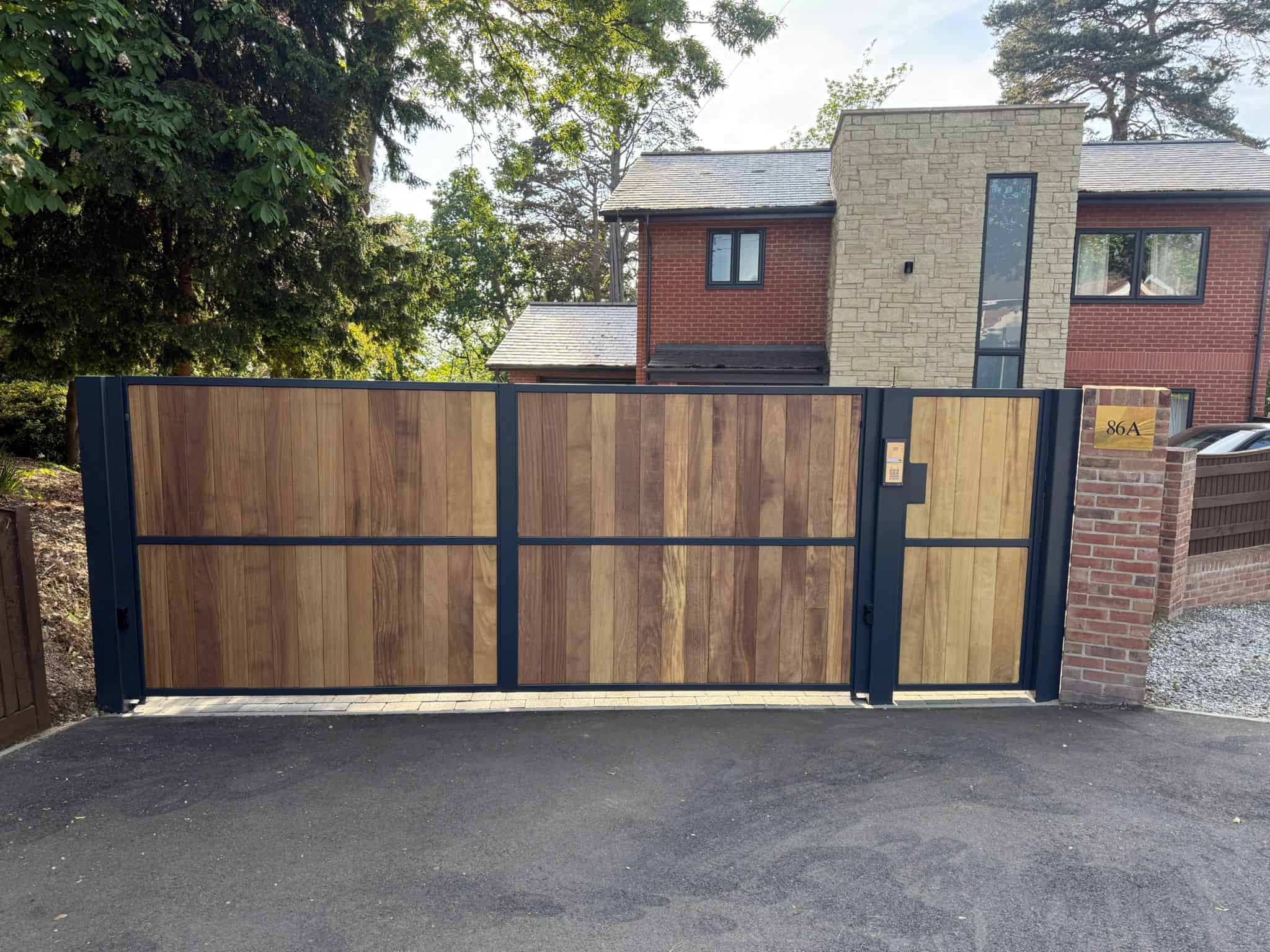
Are Electric Gates Safe?
Electric gates are safe when they are correctly designed, installed, commissioned and maintained. Problems usually arise when gates are poorly specified, missing the right safety devices, badly wired, incorrectly adjusted or left without proper servicing.
Yes — But Only When the Whole System Is Safe
Electric gates are not just normal driveway gates with a motor added. Once a gate is automated, it becomes a powered entrance system. That means the gate, motor, control panel, safety devices, access control, wiring, posts, hinges or sliding hardware all need to work together safely.
A safe electric gate installation starts with the entrance design. The installer needs to consider how the gate moves, where someone could become trapped, how vehicles and pedestrians use the entrance, and what could happen if a child, visitor, pet or vehicle enters the movement area.
Safety depends on the full system, not one individual part. Photocells, safety edges, force limitation, correct control setup, safe stop zones, commissioning and regular servicing can all be part of a safe installation.
What Can Make Electric Gates Dangerous?
Most electric gate safety problems come from poor specification, poor installation or lack of maintenance. A gate can look neat from the outside but still have serious safety issues if the trap points, forces, sensors, wiring and mechanical movement have not been dealt with properly.
Common risk areas include hinge gaps on swing gates, crushing points at posts, shear points on sliding gates, exposed drive mechanisms, weak foundations, poor alignment, damaged safety edges, failed photocells and gates that continue moving when they should stop or reverse.
Safety should not be treated as an afterthought. The safest electric gate systems are designed properly from the start, with the gate layout, automation equipment and safety devices specified around the site.
Unsafe Gate Warning Signs
- The gate closes on people, pets or vehicles
- Photocells or safety edges are missing or damaged
- The gate does not stop or reverse correctly
- There are obvious crushing, trapping or shear gaps
- The gate moves unevenly, drags or shudders
- The motors, hinges or track sound strained
- The system has not been serviced for a long time
What Safety Devices Do Electric Gates Need?
The correct safety setup depends on the gate type, layout and risk assessment. A safe electric gate system may need a combination of physical design, force limitation, sensors, safety edges, guarding and correct commissioning.
Photocells and Light Curtains
Photocells and light curtains use a beam between a transmitter and receiver. If the beam is broken during gate movement, the control system can stop or reverse the gate depending on how the system is designed and wired.
Safety Edges
Safety edges are pressure-sensitive strips fitted to risk areas of the gate. When activated, they help the control system stop the gate and move away from the obstruction where the system is configured to do so.
Force Setup and Testing
Where force limitation is part of the safety strategy, the forces need to be set and checked properly. Force alone is not a complete safety solution, but it can form part of a properly specified system.
Safe Stop Zones
The gate should be designed so that people are not trapped when the gate stops. This matters around hinges, posts, closing gaps, sliding gate run-back areas and any fixed structure near the moving leaf.
Correct Control Setup
Safety devices only work properly when they are wired, configured and tested correctly. The control panel, motor, sensors and access control must be compatible and commissioned as one system.
User Handover
A proper handover should explain how the gates operate, how the safety devices work, what warning signs to look for, and why ongoing maintenance matters.
Safe Electric Gates Start With the Design
The safest way to install electric gates is to design out avoidable hazards before the system is built. That means considering the movement of the gate, hinge gaps, sliding gate run-back areas, foundations, posts, wind loading, guarding, access control and the normal behaviour of people using the entrance.
Retrofitting safety equipment onto a badly designed gate is not the ideal approach. Safety should be considered before the gate is fabricated, before the posts are installed and before the automation is specified.
BS EN 12453 is an important safety standard for powered gates and sets out performance requirements around safe operation, force limitation and protection from crushing, shearing, drawing-in and impact risks. A safe automated gate should be designed and commissioned with those principles in mind, rather than relying on a motor alone.
This is especially important where children, pets, delivery drivers, visitors or pedestrians may be near the gate while it is moving.
Design Checks
- Gate type and movement path
- Hinge, post and closing gaps
- Sliding gate run-back area
- Foundations and structural support
- Vehicle and pedestrian access
- Safety device positions
- Motor and control compatibility
- Future servicing access
Safe Gates Need Regular Servicing
Electric gates can become unsafe over time if they are not maintained. Components wear, foundations move, hinges loosen, sliding tracks collect debris, safety devices fail and weather can affect wiring, motors and control equipment.
Regular servicing helps identify faults before they become dangerous or expensive. A service should check the mechanical movement, automation, safety devices, control panel, access control and overall gate behaviour.
If a gate is used frequently, forms part of a workplace, serves a shared residential entrance or is used by the public, maintenance becomes even more important. For ongoing checks and fault finding, see our Gate Servicing & Repairs page.
Electric Gate Safety Should Follow HSE Guidance
Electric gates are powered machines, so safety cannot be treated as an optional extra. A proper electric gate system should be designed, installed, commissioned and maintained with the movement of the gate, trap points, force limitation, safety devices and user behaviour in mind.
We follow HSE electric gate safety guidelines when specifying and installing automated gate systems.
We also consider the principles of BS EN 12453 when specifying powered gate systems, including protection against crushing, shearing, drawing-in and impact risks. The safety setup may include photocells, safety edges, force limitation, guarding, correct control configuration and proper commissioning depending on the gate and site layout.
This includes considering risks such as crushing, shearing, drawing-in and impact, as well as making sure the correct safety equipment is installed, tested and maintained. For new automated systems, see our Electric Gates Hampshire service.
What If Your Current Electric Gate Feels Unsafe?
If an electric gate behaves unpredictably, closes too hard, has missing safety devices, makes unusual noises, drags, shudders, or has visible trap points, it should be checked by a competent gate automation specialist.
Do not assume an old gate is safe because it has worked for years. Older installations may not meet current expectations, especially if they have never been properly serviced, upgraded or risk assessed.
If the existing gates are suitable, a corrected automation setup may be possible. If the gates, posts or hinges are unsuitable, a new electric gate system may be safer long-term.
Useful Pages About Electric Gates and Safety
These pages explain electric gates, automation, installation, access control, servicing, costs and related gate systems before you request a survey.
Electric Gate Safety FAQs
Common questions about electric gate safety, safety devices, HSE guidance, BS EN 12453, servicing, risk assessment and compliant installation.
Are electric gates safe?
Yes, electric gates are safe when they are correctly designed, installed, commissioned and maintained. The gate, automation, safety devices and access control must be specified as one complete system. For new systems, see our Electric Gates Hampshire service.
What safety equipment do electric gates need?
Electric gates may need photocells, safety edges, force setup, safe stop zones, guarding and correct control configuration. The exact safety setup depends on the gate type, movement area and site risk assessment.
What is BS EN 12453 for electric gates?
BS EN 12453 is a safety standard for powered doors, gates and barriers. For electric gates, it is relevant to safe operation, force limitation and reducing risks such as crushing, shearing, drawing-in and impact.
Are photocells enough to make an electric gate safe?
Not always. Photocells can help reduce the risk of a gate closing on a person or vehicle, but they are not the only safety measure. Safety edges, force setup, guarding and good design may also be required depending on the installation.
Does access control affect electric gate safety?
Yes. The way a gate is opened, closed and controlled can affect how safely the system is used. Keypads, intercoms, GSM access, remotes and video entry should be specified around the gate automation and safety setup. For more detail, read our Electric Gate Access Control guide.
Do electric gates need servicing?
Yes. Electric gates should be serviced to remain reliable and safe. Servicing helps check the gate movement, motor, control panel, safety devices, access control and any signs of wear or failure. See our Gate Servicing & Repairs page.
Can existing gates be made safe for automation?
Sometimes. Existing gates need to be structurally sound, correctly hung, stable and suitable for safe movement. If they are badly aligned, weak, rotten, too heavy or poorly supported, replacement may be safer than automation. For existing gates, see our Gate Automation Hampshire service.
Who is responsible for electric gate safety?
Installers must leave the gate safe and correctly commissioned after their work. Owners and operators also have responsibilities to make sure gates are used safely and maintained properly, especially in shared, commercial or workplace settings.
What are the warning signs of an unsafe electric gate?
Warning signs include gates closing too hard, failing to stop or reverse, damaged safety edges, missing photocells, unusual motor noise, dragging, shuddering, exposed trap points, poor alignment or a system that has not been serviced for a long time.
How much does a safe electric gate system cost?
The cost depends on the gate type, automation, access control, safety equipment, power supply, groundwork and commissioning. For pricing guidance, read our Driveway Gates Cost Guide.
Do you install safe electric gates across Hampshire?
Yes. Perimeter Fencing and Gates installs electric gates and gate automation systems across Hampshire, with safety equipment, access control, commissioning and servicing considered as part of the complete gate system. See our Electric Gates Hampshire page.
Want a Safe Electric Gate System?
We can assess your entrance, specify the right gate and automation setup, and install the safety equipment needed for a properly commissioned system.