
Wooden vs Metal
Driveway Gates.
Choosing between wooden and metal driveway gates depends on appearance, maintenance, structure, automation, privacy and long-term reliability. This guide explains the practical differences between timber, steel, aluminium and hybrid steel-framed timber gate systems.
Which Is Better: Wooden or Metal Driveway Gates?
Neither material is automatically better. Wooden driveway gates are often chosen for warmth, privacy and traditional character. Metal driveway gates are often chosen for structural stability, slim modern designs and lower routine maintenance.
The best choice depends on the property style, gate size, exposure to wind and weather, whether the gate will be automated, how much privacy you want, and how much maintenance you are prepared to carry out.
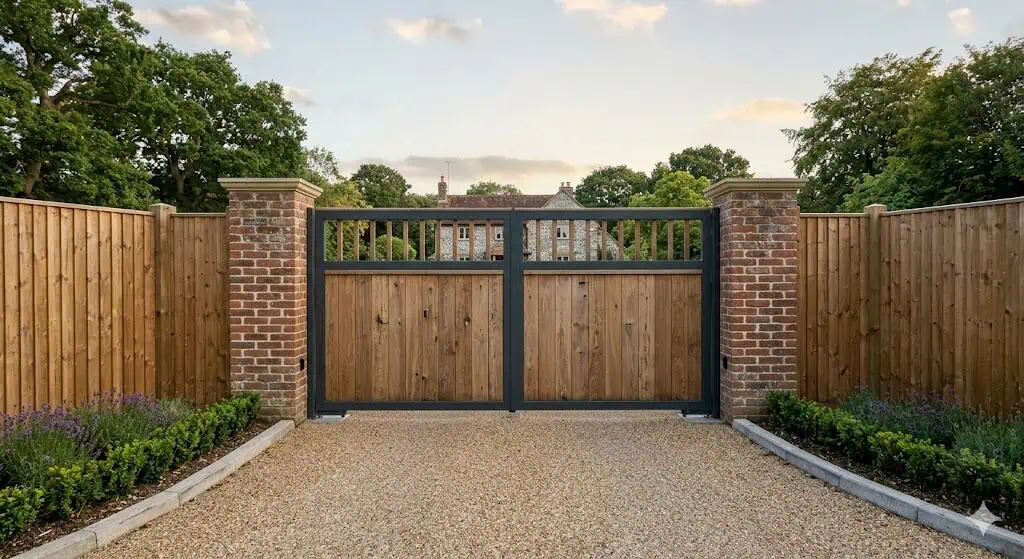
For many premium installations, a hybrid design can be the strongest option: a steel structural frame with timber cladding. This gives the appearance of wood while improving the gate’s rigidity and suitability for automation.
Wooden Gates vs Metal Gates
Timber and metal can both create a premium entrance, but they behave differently over time and suit different design goals.
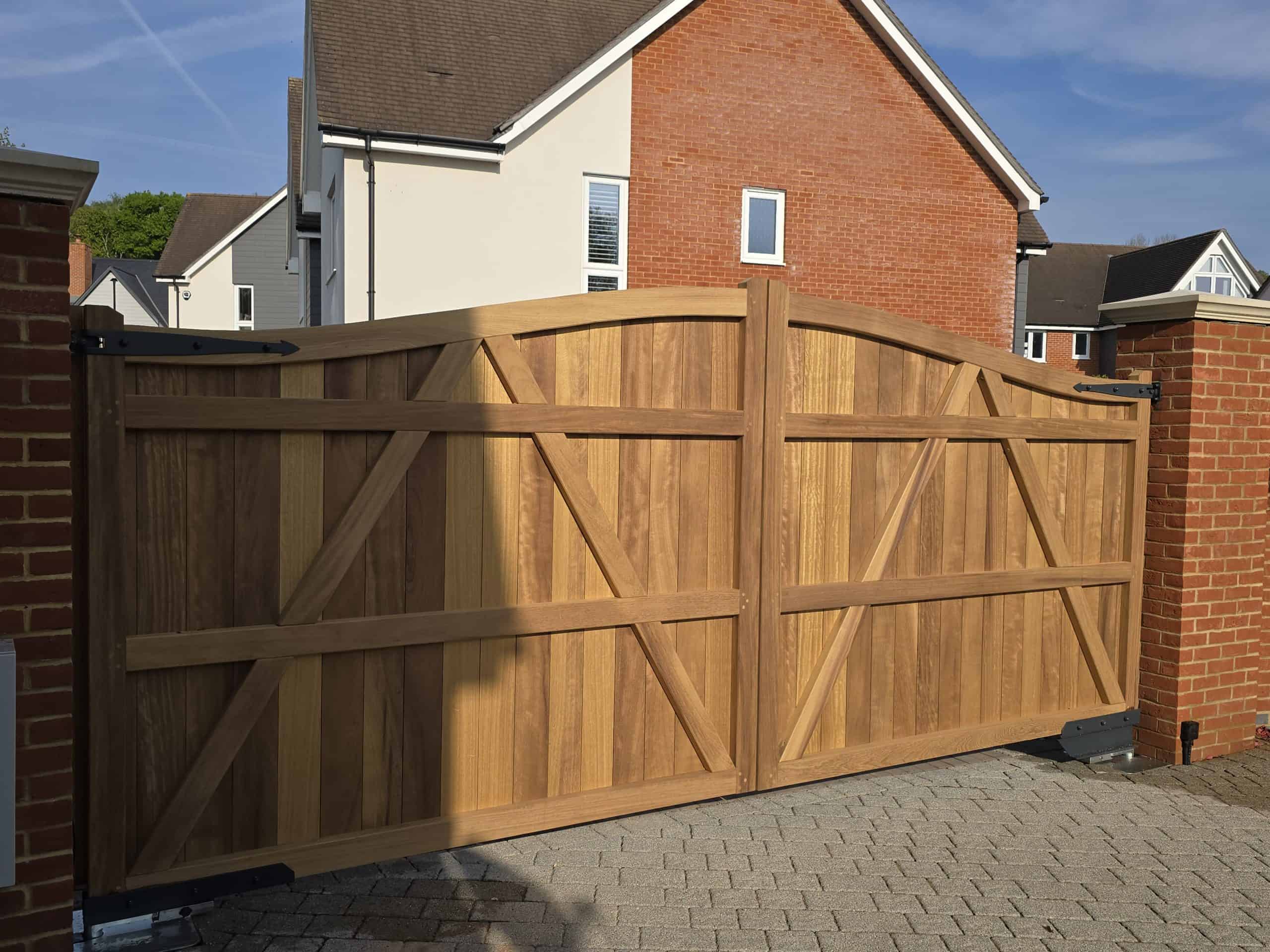 Wooden Driveway Gates
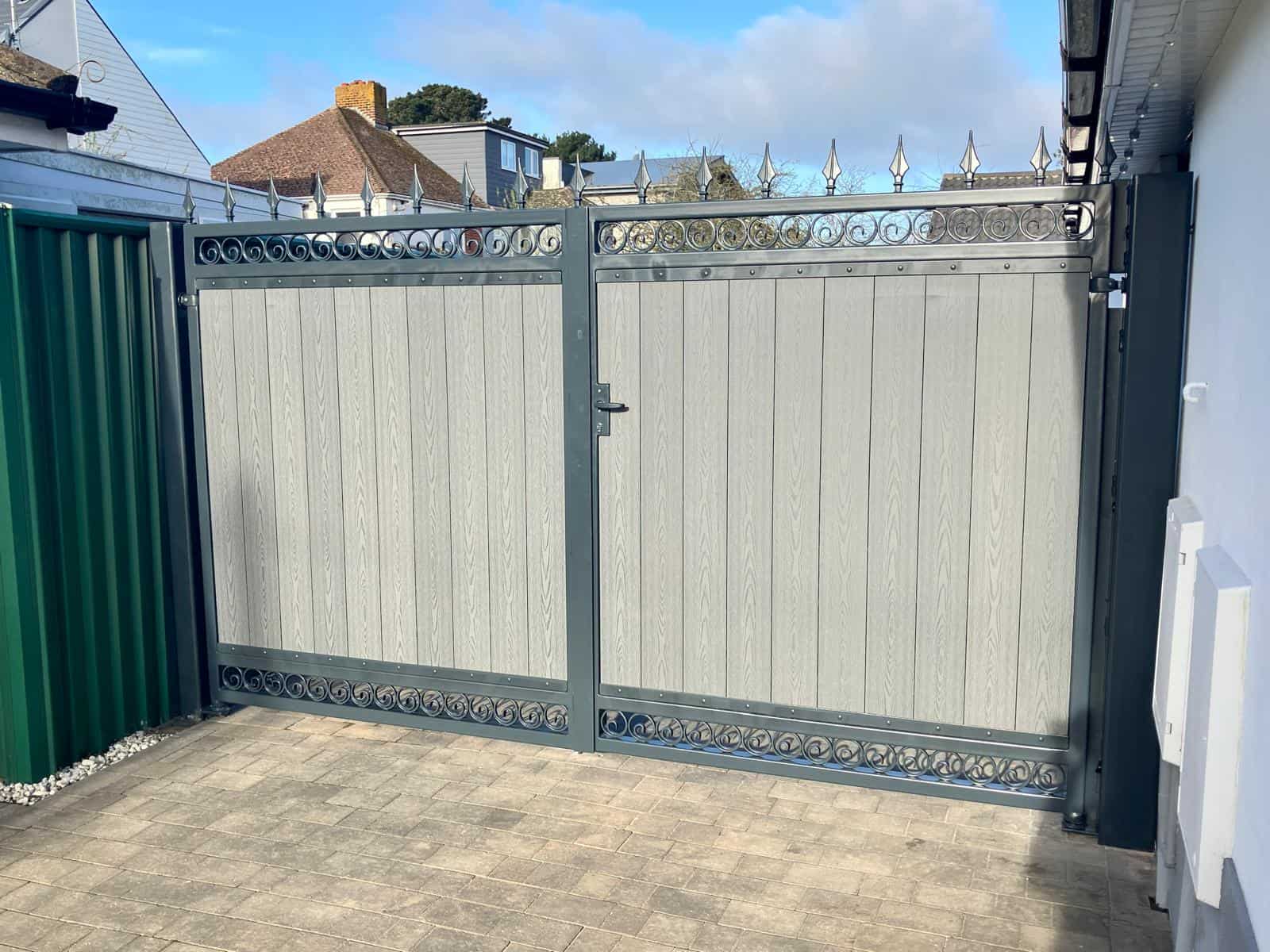 Metal Driveway Gates
What Affects the Choice?
The material decision should be based on more than appearance. Weight, movement, maintenance, automation and exposure all affect long-term performance.
Appearance
Timber gives a softer, warmer and more traditional look. Metal suits cleaner modern designs, slim profiles, powder-coated finishes and contemporary properties.
Privacy
Timber gates are often used for solid privacy entrances. Metal gates can also provide privacy, but fully solid metal designs need careful thought around weight and wind loading.
Maintenance
Timber normally needs more routine care, such as cleaning and re-oiling or finishing. Metal gates usually need less regular upkeep but still require inspection of coatings, hinges and hardware.
Automation
Automated gates need stable, well-supported leaves. Heavy timber gates, solid panels and exposed entrances need the correct motor specification and safety setup.
Movement
Timber can move slightly with moisture and temperature. Metal is generally more dimensionally stable, but it still relies on correct fabrication, posts and installation.
Longevity
Both materials can last well when built properly and maintained. Lifespan depends on timber species, steel protection, coating quality, exposure and servicing.
Wooden vs Metal Driveway Gates Comparison
This table gives a practical comparison. The right choice should be based on the entrance design, maintenance expectations, automation requirements and property style.
| Factor | Wooden Driveway Gates | Metal Driveway Gates |
|---|---|---|
| Appearance | Traditional, warm, natural and suited to rural or character properties. | Modern, clean, architectural and suited to contemporary designs. |
| Privacy | Excellent for solid privacy gates and boarded designs. | Can be open, semi-private or fully private depending on design. |
| Maintenance | Usually needs periodic cleaning, oiling, staining or refinishing. | Usually lower maintenance, but coatings, hinges and fixings still need checking. |
| Automation Suitability | Can be automated when built strongly and specified correctly. | Often structurally stable and well-suited to automation when fabricated properly. |
| Wind Exposure | Solid timber gates can catch wind, especially on exposed entrances. | Open metal designs reduce wind loading; solid metal panels still need careful specification. |
| Best For | Privacy, traditional entrances, rural properties and natural character. | Modern homes, low-maintenance designs, security-led entrances and clean architectural lines. |
When Are Wooden Driveway Gates Best?
Wooden driveway gates are a strong choice where privacy, warmth and traditional appearance are important. They can suit period homes, rural properties, country entrances and driveways where a softer natural finish works better than metal.
Hardwoods such as Iroko are commonly used for premium gates because they are durable and attractive when maintained correctly. However, timber is still a natural material. It can move, weather and change appearance over time.
If timber gates are going to be automated, the build quality matters. The gate should be strong, stable, properly hung and matched to suitable automation, safety equipment and access control.
When Are Metal Driveway Gates Best?
Metal driveway gates are often chosen where strength, stability, modern design and lower routine maintenance are priorities. Steel and aluminium can both be used, but they behave differently and should be specified correctly for the design.
Steel is strong and well-suited to structural frames, but it needs proper corrosion protection and finishing. Aluminium is lighter and naturally corrosion-resistant, making it useful for some modern gate designs.
Metal gates can be excellent for automation when the frame, posts, hinges or sliding hardware are properly designed and installed.
Steel-Framed Timber Gates Can Offer the Best Balance
For many premium gate projects, the strongest answer is not purely wooden or purely metal. A steel-framed timber gate can combine a rigid structural frame with the visual warmth and privacy of timber.
This approach is especially useful where the gate will be automated. The steel frame helps improve stability, while the timber cladding gives the entrance the traditional or natural appearance the customer wants.
The frame, timber, hinges or sliding hardware, posts, automation, access control and safety devices should all be specified as one system.
Wooden vs Metal Driveway Gates FAQs
Common questions about timber gates, steel gates, aluminium gates, maintenance, automation and long-term performance.
Are wooden or metal driveway gates better?
It depends on the entrance and the look you want. Wooden gates suit privacy and traditional appearance, while metal gates suit modern designs, structural stability and lower routine maintenance.
Do wooden driveway gates need more maintenance?
Usually, yes. Wooden gates generally need more care than metal gates, including cleaning and periodic treatment or finishing. The exact maintenance depends on the timber species, coating and exposure.
Are metal gates better for automation?
Metal gates can be very suitable for automation because they are often structurally stable. However, timber gates can also be automated if they are built correctly and matched with suitable motors, safety devices and access control.
What are steel-framed timber gates?
Steel-framed timber gates use a steel structural frame with timber cladding or infill. This gives the strength and stability of steel with the appearance and privacy of timber.
Do solid gates catch the wind?
Yes. Any solid gate, timber or metal, can catch wind. This is important when specifying hinges, posts, sliding hardware, automation and safety settings, especially on exposed driveways.
Which gate material lasts longest?
Lifespan depends on the build quality, protective finish, environment and maintenance. Well-built timber, steel and aluminium gates can all last well when specified and maintained properly.
Book a Wooden or Metal Gate Survey
We can assess your entrance, explain the best gate material for your property, and specify the right frame, finish, automation and access control setup.